









For more than four decades, Dr. Isaac Kinity’s public life has been shaped by activism against corruption, abuse of public power and violations of human rights. From his early years in Kenya’s civil service movement to political persecution, exile and years of advocacy from the United States, his journey has remained closely connected to questions of governance and the treatment of ordinary citizens.
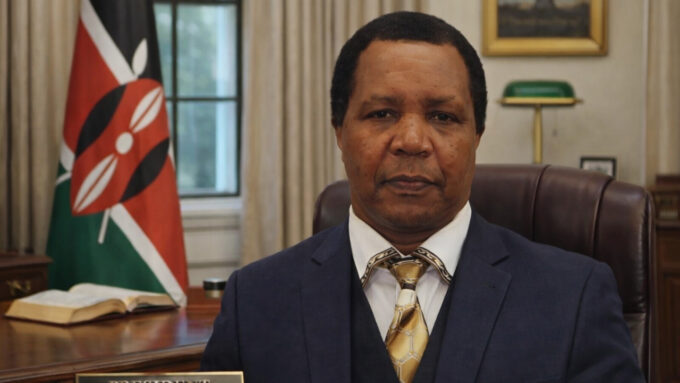
Now, as Kenya looks toward the 2027 presidential election, Kinity says he has accepted the call from citizens urging him to offer himself for the country’s highest office.
The decision marks a new chapter in a life that has already taken him through some of the most difficult experiences of his activism. He recalls a period when challenging the abuse of public power came at a personal cost.
> “I almost paid the price with my own life.”
Kinity’s decision to accept the call to pursue Kenya’s presidency is rooted in the issues he says have driven his activism for decades. He identifies corruption as Kenya’s greatest enemy and argues that confronting it would open up resources for food security, infrastructure, healthcare and social welfare.
Among the priorities he has articulated are addressing hunger, supporting widows and orphans, caring for elderly citizens and creating opportunities for young people and farmers. His political outlook is closely tied to his long-standing concern about the use of public resources and the responsibility of government to protect citizens.
From Connecticut, where he now lives, he continues to follow developments in Kenya and speak about good governance and human rights. The presidential call did not emerge from a conventional political career. It follows decades of activism, beginning in Kenya and later continuing from exile in the United States.
Kinity grew up on the forested slopes of the Mau, at Nessuit Forest Station, in a disciplined Christian household. His childhood was shaped by a period when corporal punishment was common in Kenyan schools. Looking back, he says those experiences taught him endurance and patience, but also strengthened his determination to stand up for other people.
His entry into organised activism came through the Kenya Civil Servants Union. By 1980, the union had accumulated substantial assets, including more than 1,000 flats in Nairobi and dozens of canteens operating in government offices. Kinity eventually emerged as the union’s Secretary General, a position from which he challenged what he regarded as the unjust treatment of workers and the seizure of their property.
His activism brought him into direct confrontation with the administration of former President Daniel arap Moi. Kinity says the Kenya Civil Servants Union was invalidated by presidential decree and that its assets were seized. He demanded the return of workers’ property and questioned the legality of the action.
The confrontation became increasingly dangerous. In September 1992, Kinity received a summons from the Special Branch in Nakuru. The document, he recalls, was signed by officers Nyambane and Okumu. He says the summons was followed by repeated threats and attempts to silence him. He also says he survived deliberate poisoning.
The consequences were severe. His health deteriorated, with partial paralysis, complications affecting his vision, kidney and bladder infections, serious damage to his veins and the collapse of his immune system.
“I was dying in pieces,” he recalls.
For Kinity, his survival was also a matter of faith.
“God did not forsake me. He protected me because he had a mission for me.”
Meanwhile, his home was repeatedly raided and his family experienced harassment and assault.
Eventually, Kinity fled Kenya for Uganda with the assistance of trusted contacts. For two years, he lived in hiding, moving between safe locations as he sought protection from the threats he says followed his activism.
In 2000, Kinity and his family resettled in New Haven, Connecticut, as refugees through Integrated Refugee and Immigrant Services. Exile, however, did not end his activism.
In the United States, Kinity continued documenting what he regarded as corruption and human rights abuses in Kenya. He communicated his concerns to international leaders and institutions and remained involved in advocacy on issues affecting vulnerable communities.
In 2005, he wrote to President George W. Bush and several United States senators concerning the proposed privatisation of Social Security. He later received a formal response from the White House.
His advocacy also extended beyond Kenya. He became involved in issues affecting Native American women facing domestic violence and was recognised by Amnesty International USA.
His work increasingly combined human rights advocacy with direct assistance to people facing difficult circumstances.
Among the cases he became involved in were Kenyan women in the United States who, according to Kinity, were defrauded by a fellow Kenyan and subsequently faced deportation because of documentation problems. He says he worked with Kenyan clergy to assist the women. According to his account, the deportation process was suspended while the case proceeded, the alleged offender was prosecuted and the women recovered their losses.
In another case, Kinity helped a Kenyan woman in Saudi Arabia reconnect with her daughter after the family lost contact and efforts to obtain official diplomatic assistance had not resolved the situation.
For him, such experiences reinforced a broader principle: that leadership and public service must ultimately be measured by how institutions and individuals respond to people who are vulnerable.
Kinity’s acceptance of the call to pursue Kenya’s presidency now brings his long history of activism into the country’s electoral conversation. His stated agenda centres on corruption, food security, social protection and economic opportunity. He says a government that successfully addresses corruption would have greater capacity to invest in essential services and improve the lives of ordinary citizens.
The transition from activist to presidential aspirant represents a significant change in the arena in which Kinity is seeking to pursue those concerns. His political journey, if it proceeds through the 2027 electoral process, will place his record, ideas and priorities before Kenyan voters.
For a Pan-African publication, Kinity’s story also raises a wider question about the relationship between civic activism and political leadership: whether a life spent confronting abuse of power, defending vulnerable communities and advocating for accountable institutions can become the foundation for a national political programme.
Kinity’s answer is expressed through the priorities he has publicly articulated — fighting corruption, addressing hunger, supporting widows and orphans, caring for the elderly and expanding opportunities for young people and farmers.
From his current home in Connecticut, he remains engaged with Kenya and continues to speak about good governance and human rights.
His acceptance of the call for the presidency therefore represents not the beginning of his public life, but another chapter in a journey that began in Kenya’s civil service movement, passed through persecution and exile, and continued for decades on the other side of the Atlantic.






Leave a comment