







Human rights activist Dr Isaac Newton Kinity has criticised the proposed removal of mandatory livestreaming of election results, questioning the motive behind the move ahead of Kenya’s 2027 General Election.
In a public address on Friday, October 23, the former trade unionist questioned why Parliament would consider removing a measure intended to enhance transparency in the announcement of election results.
“What is the main reason behind removing the livestreaming of the election results if not for the purposes of the advance plan of rigging the 2027 election?” Kinity asked, describing the move as “the absolute violation of the sovereignty of millions of Kenyans.”
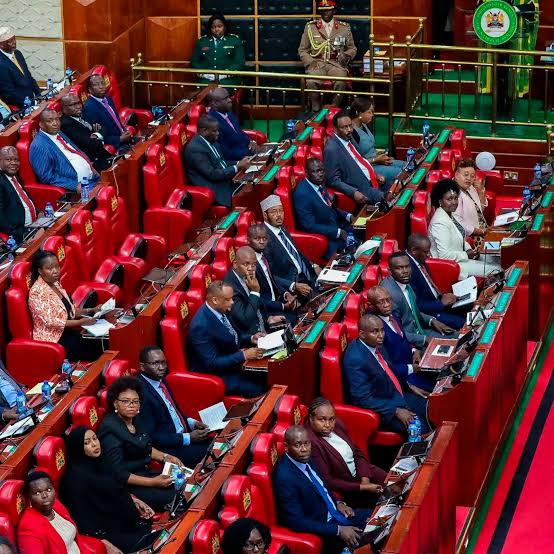
Parliament, through the National Assembly, has passed the Elections (Amendment) (No. 2) Bill, 2024, also known as Senate Bill No. 29 of 2024, which proposes amendments to the Elections Act, 2011. The proposed changes have sparked debate over whether the legislation removes the explicit requirement for the Independent Electoral and Boundaries Commission (IEBC) to livestream the announcement of results at polling stations.
The controversy has prompted lawyer John Muremi Njomo to petition the Milimani High Court, seeking to stop the Bill from proceeding to presidential assent if it contains provisions that remove mandatory livestreaming of election results.
Njomo is challenging Clause 22 of the Bill, which proposes changes to Section 39 of the Elections Act. He is seeking conservatory orders to preserve the existing legal position as the country prepares for the 2027 General Election.
The High Court has certified the petition as urgent and directed the respondents to file their responses. The case is scheduled for mention on November 2, 2026.
Former Law Society of Kenya president Faith Odhiambo has separately called on Parliament to publish the final text of the approved amendments and clarify whether the omission of an explicit livestreaming requirement remains in the Bill.
Odhiambo has cautioned that the absence of an express provision requiring livestreaming does not necessarily amount to a ban on the practice. However, she has raised questions about how the public will scrutinise the announcement of results and how the IEBC will demonstrate compliance with Article 86 of the Constitution, which requires elections to be accurate, verifiable, secure, accountable and transparent.
National Assembly Majority Leader Kimani Ichung’wah has dismissed claims that Parliament has removed the livestreaming requirement, arguing that the amendments do not eliminate the provision. He has accused critics of spreading misleading information and maintained that the Bill does not remove the existing safeguard.
The Bill, having originated in the Senate and subsequently been amended by the National Assembly, must undergo the remaining legislative steps before it can proceed to presidential assent.
Kinity, who is also the chairman of the Kikimo Foundation for Corruption and Poverty Eradication, has challenged Parliament to explain the rationale behind any change that could affect public scrutiny of election results ahead of the next general election.






Leave a comment