







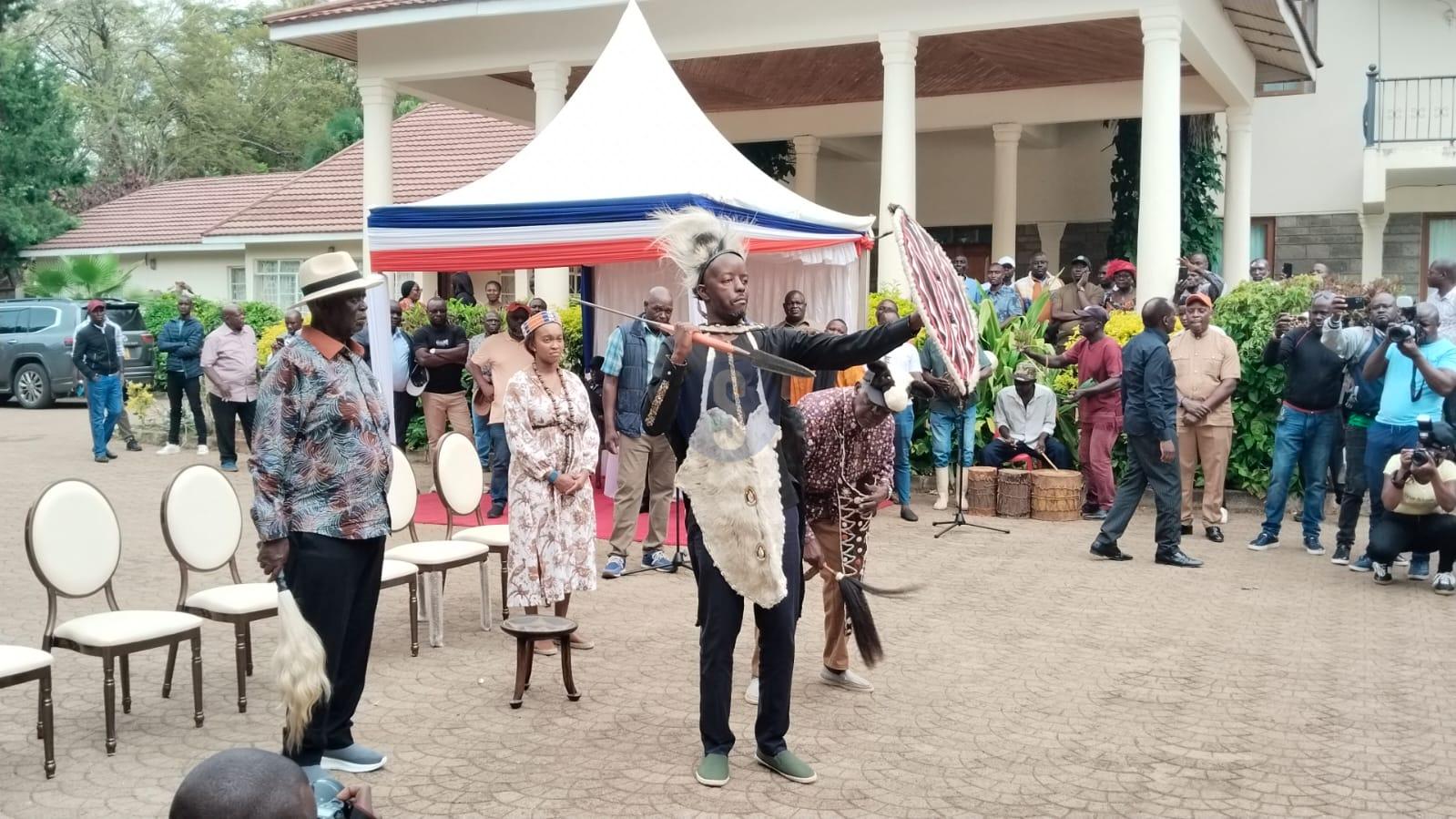
As the country moves closer to the 2027 general election, the political temperature in Luo Nyanza is rising. The passing of Raila Amollo Odinga has left a deep void, and the big question now is whether Raila Odinga Jr. can step in and keep the mantle together. It is a fair question, but the honest answer, for now, leans toward not quite.
For decades, the late Raila Odinga was more than a politician to the Luo people. He was a movement and a symbol of resistance in Kenya’s long struggle for democracy. His journey through detention, exile, and political persecution earned him a near-sacred status. Raila Jr., however, has not gone through that kind of test. He is still finding his voice in a political space built entirely around his father’s legacy. That is his biggest challenge, trying to fill shoes that history itself made larger than life.
To many in Nyanza, the late Raila Odinga was not just a leader. He was their struggle and their hope. Raila Jr. has not yet shown that he can build that emotional bond beyond his family name. Times have changed, and so have the voters. The Luo youth today are less attached to legacy politics. They respected Raila Odinga Senior deeply, but they are also frustrated by unfulfilled promises and decades of opposition politics. Raila Jr. may carry the right surname, but for many young voters, that is no longer enough.
They want opportunity, not nostalgia. They want leaders who speak their language of jobs, innovation, and progress, not just history. While his father built loyalty through sacrifice and struggle, Raila Jr. will have to build his through results and relevance.
Without Raila Senior’s commanding presence, Luo politics is showing cracks. Governors, MPs, and wealthy elites are carving their own paths. Unity in Nyanza once came from one voice, but now it is a mix of competing ambitions. If Raila Jr. steps in too soon, he may find himself trapped between powerful interests. Luo leaders are already forming national alliances and cutting deals that serve personal gain rather than collective unity. It is not betrayal. It is politics.
This makes Raila Jr.’s task even harder. Even if he manages to rally the Luo base, national politics in 2027 will demand more than ethnic loyalty. The days of tribal voting blocs controlling outcomes are fading. Voters are crossing old boundaries, choosing leaders who speak to their daily struggles. If Raila Jr. fails to expand his message beyond Nyanza, he risks being seen as a regional figure in a national contest. His greatest battle may not be against his opponents but against the weight of expectations.
The Luo people expect him to carry his father’s torch, to continue the dream, and to remain “Baba’s son” in name and spirit. But modern politics does not reward inheritance. It rewards authenticity. If he imitates the late Raila Odinga, he will be dismissed as a shadow. If he moves too far from his father’s legacy, he risks losing the emotional connection that holds the Luo bloc together. It is a delicate balance that few can master and even fewer can survive.
The Luo nation has always stood behind its leaders with fierce loyalty, but times are changing. Raila Jr. may have the name, the network, and the platform, but unity cannot be inherited. It must be earned. To unite the Luo people ahead of 2027, he must prove that he is more than a legacy. He must stand on his own principles, connect with the new generation, and redefine what Luo unity means in today’s Kenya. Until then, the dream of one united voice from Nyanza under Raila Jr. remains just that, a dream.





amazing article