







When President William Ruto announced that the ban on tree logging was lifted, I couldn’t help but pause. For a moment, it sounded like good news because so many Kenyans have been struggling to make a living in the timber industry. Sawmill workers, carpenters, and furniture makers have waited years for this moment. Finally, they said, “We can go back to work.”
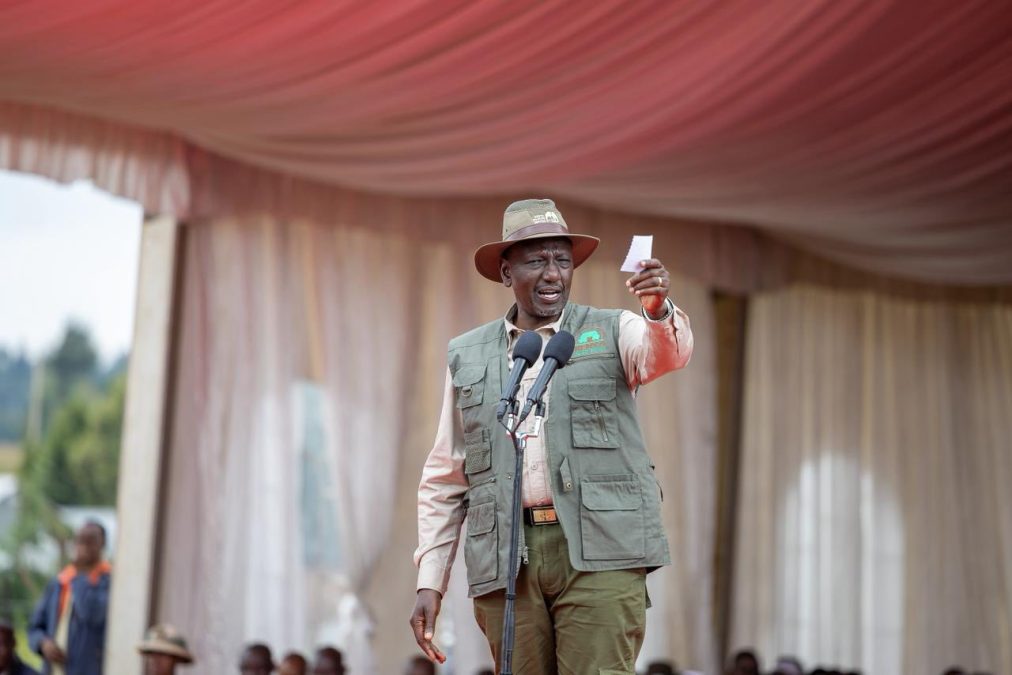
“We shall reopen the timber factories here in Elburgon. I have told my Minister of Trade, Mr Lee Kinyanjui, that importing furniture from China must end. We will use our wood to make furniture,” President Ruto said,during a public engagement at Molo Technical and Vocational College in Elburgon, Nakuru County.
But then another thought hit me. What happens to our forests,those quiet, breathing giants that give us rain, clean air, and shade on a hot afternoon? What happens to the rivers that depend on those trees? The truth is, once you’ve seen a bare hill that used to be green, you understand that cutting trees isn’t just about wood,it’s about life.
President Ruto stressed that the directive was only meant to harvest mature tress in forests across the country and cautioned against using it for illegal logging of trees and destruction of the environment. “The lifting of the logging ban does not mean that we destroy our forests. It means we will harvest trees responsibly, replant them, and ensure our forests remain sustainable,” he said.
Ruto says mature trees should be harvested to create space for new growth, and yes, that makes sense in theory. But we live in a country where “regulated” logging often turns into a free-for-all. Where powerful cartels use government policies as a cover to cut down forests faster than they can grow back. We’ve seen it before,rivers drying up, droughts lasting longer, floods becoming even more dangerous.
Ruto first lifted the six-year ban on July 2, 2023 during a visit to Molo, Nakuru County but on Thursday, October 12, 2023, the Environment and Land Court found that the directive did not follow the required procedure by involving public participation citing that President William Ruto acted on the assumption of court proceedings and cancelled the same,citing no evidence of public participation prior to the consent.
“A declaration be and is hereby issued that the lifting of the moratorium on logging activities was not by the President, but by the consent of the parties in Nyeri and Meru High Court , which lacked public participation and therefore, unconstitutional, null and void,” Judge Oscar Angote ruled.
The judge, however, ordered that the 5,000 hectares of mature and over mature forest plantation trees that have been identified by the Multi-Agency Oversight Team to be harvested.
President Ruto also announced that the government will soon begin selling mature trees in all public forests to local sawmillers.Discussions with sawmillers would be held to agree on guidelines for responsible logging and sustainable forest management,he said.
Because lifting the ban isn’t necessarily bad but lifting it without discpline is dangerous. Kenya can find a balance, but it requires more than just speeches. It means involving communities in reforestation, empowering youth in green jobs, and making sure every log that leaves a forest is accounted for.
When I look at our changing weather,the unpredictable rains, the dry rivers, I realize that the environment always hits back harder. Maybe the real question isn’t whether President Ruto was right or wrong. Maybe it’s whether we, as Kenyans, will finally protect the only home we have.





Leave a comment